
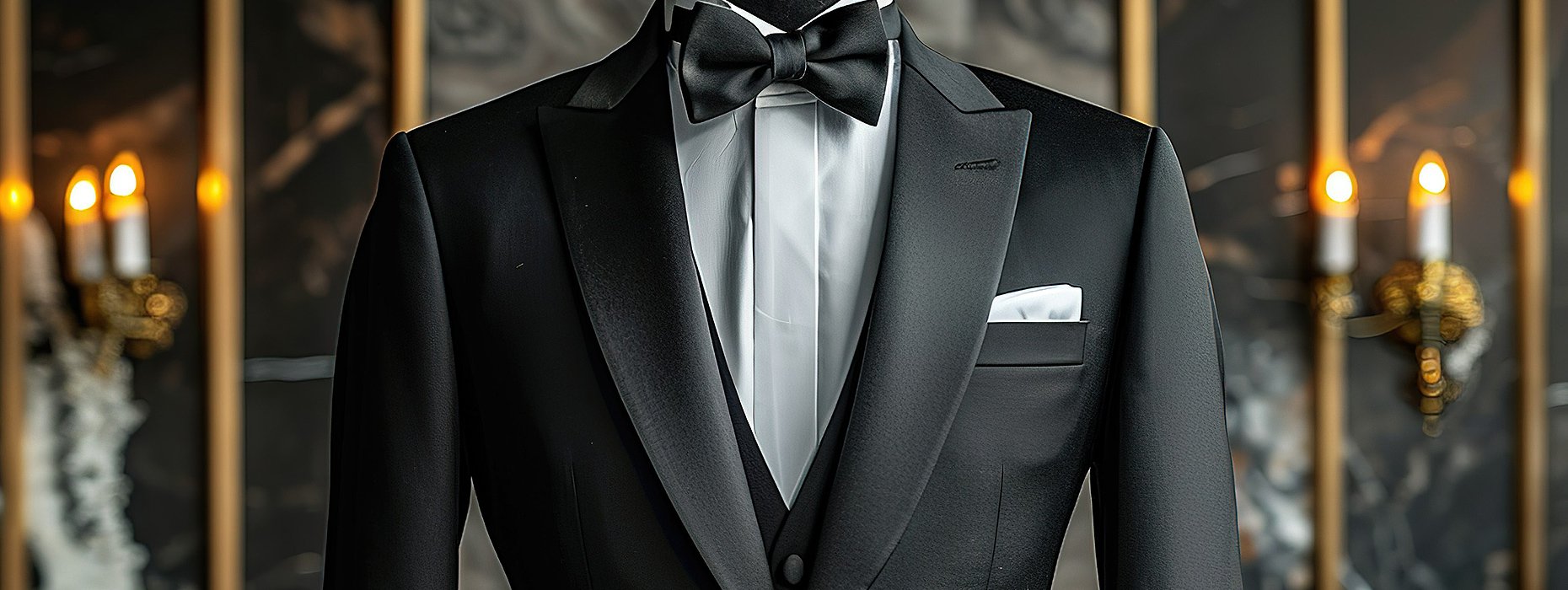
Tailor-made tuxedos,
in your style!
Black tie is the classic evening dress code reserved for occasions of particular distinction — galas, formal receptions, ceremonial dinners, or elegant weddings taking place in the afternoon or evening. The most characteristic expression of black tie is, of course, the dinner suit, yet in certain settings a highly formal black suit or a midnight blue suit may also be entirely appropriate, especially where the nature of the event allows for a slightly broader interpretation of the code.
For that reason, it is essential to read the level of formality correctly and to choose an outfit that is in keeping with the occasion, the hour, and its overall tone. At VAN THORN, we help translate the principles of black tie into a considered, elegant ensemble — whether that means a classic made-to-measure dinner suit or a refined evening suit shaped by the language of timeless style.
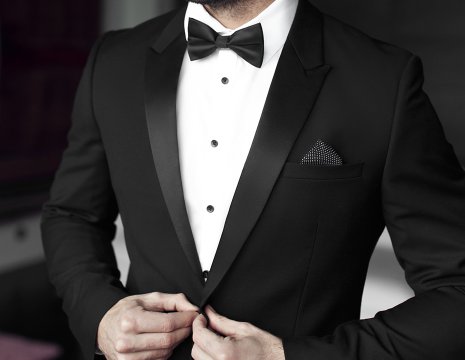
A dinner suit is defined by the elements that give it its unmistakably formal evening character. These include satin or silk detailing on the shawl collar or peak lapels, fabric-covered buttons, satin-trimmed pocket welts, and the braid running along the outside of the trousers. The most classic version is a single-breasted one-button dinner jacket, although double-breasted dinner suits have once again become a refined and increasingly popular choice.
A proper black tie ensemble also calls for the right finishing pieces: a bow tie, a cummerbund or evening waistcoat, and patent leather shoes or other suitably formal evening footwear. The trousers should maintain a clean, elegant line and are traditionally made without belt loops. Fabric matters just as much. Much of a dinner suit’s character comes from cloths and weaves chosen specifically for eveningwear — one of the key distinctions between a true dinner suit and an ordinary suit.
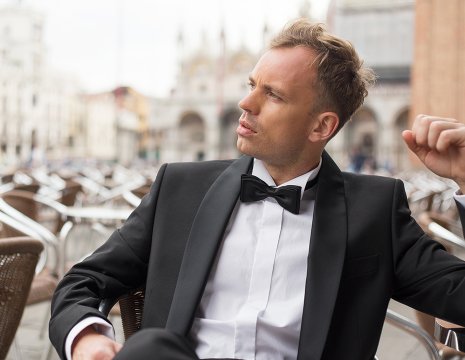
A dinner suit follows a well-established tradition, yet still allows for a surprising range of interpretation through fabric and colour. The most classic choices include cloths associated with formal eveningwear, such as barathea, faille, and fresco — each offering a different texture, depth of colour, weight, and drape. Fabric plays a central role in shaping the character of the garment, determining whether the result feels more ceremonial, more traditionally formal, or slightly lighter in expression.
The most formal choice remains the black dinner suit, while midnight blue offers an equally elegant and often particularly refined alternative. In certain settings, styles in creamy shades of white can also work beautifully. Alongside these classics, there is also room for more individual interpretations, including jacquard or velvet dinner jackets in richer, more expressive tones. This allows a dinner suit to remain faithful to the principles of black tie, while still reflecting the occasion and the character of the man wearing it.
ul. Sienna 39, 00-121 Warszawa
+48 512 450 690

Al. Zwycięstwa 250, 81-540 Gdynia
+48 510 793 585